
The Happiest Man Alive
My Iranian Uncle

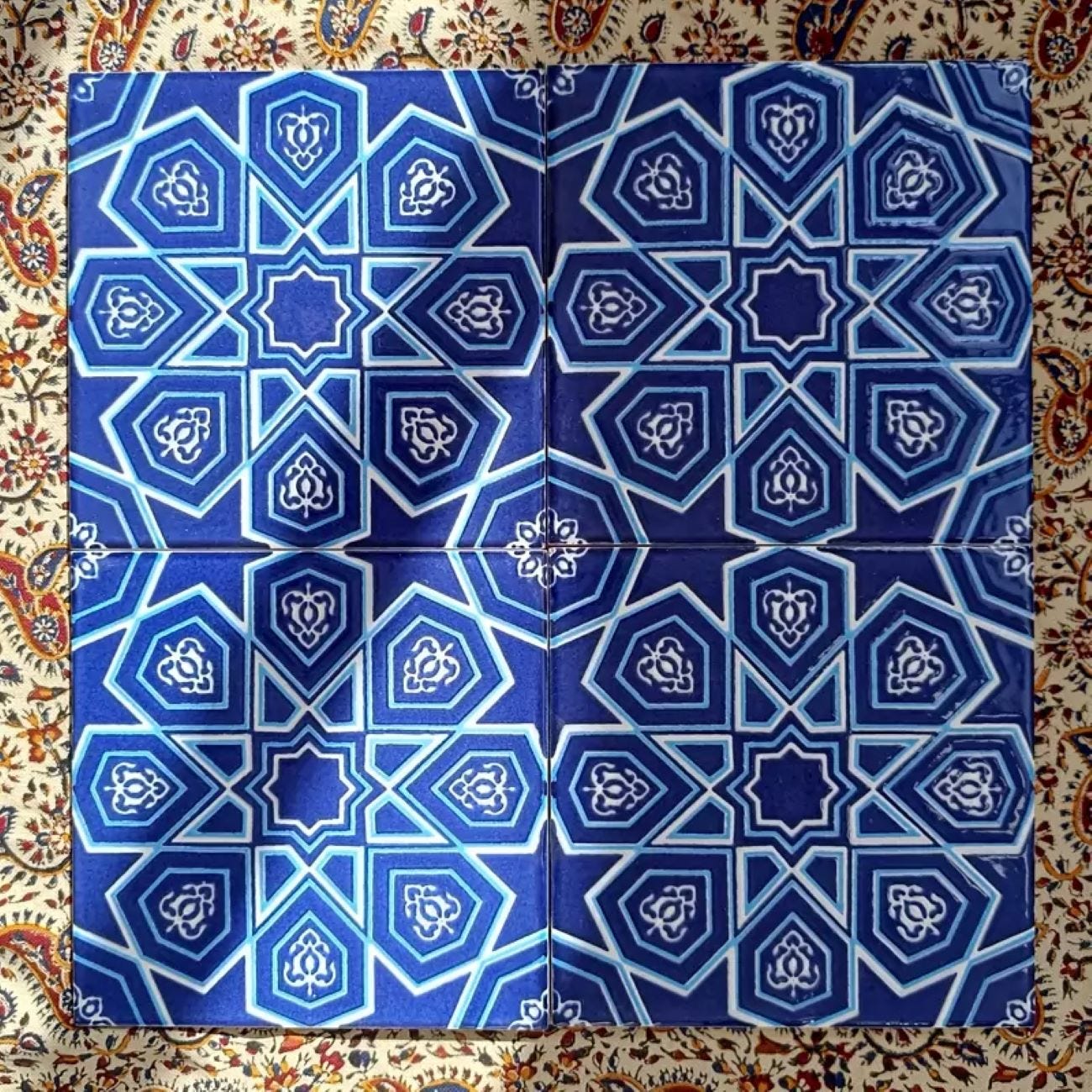
The Happiest Man Alive: My Iranian Uncle
In March 1977, our favourite aunt, Paula, married her Iranian fiancé, Yaghoub, in Oxford. With no aspirations to be an actress, unlike her younger sister, Paula was gloriously, unselfconsciously unadorned. I can’t recall her ever wearing make-up. She was never less than true to herself. To avoid having to do anything with her hair she wore a silk, colourfully patterned headscarf permanently attached to her head. Even her wedding dress was a simple red-and-cream mid-ankle number from Dorothy Perkins, coupled with white court shoes (the nearest she came to heels in the time I knew her). Her big day was the only time I remember her letting her hair down, which was revealed as long and abundant with faint streaks of grey. A research fellow working on tropical diseases at Oxford Brookes, Paula embodied what might be called a ‘lively intelligence’. She had a twinkle, a cerebral sparkle, behind her big, round, foggy spectacles. Ask her anything and she seemed to know it, from the length of the Amazon to the formation of igneous rocks. There was a mental spring in her step which my brother James and I took to at once. And she was motherly, or rather homely, in a way our own mother increasingly wasn’t, with her blue eyeshadow, perfume and exercise routines designed to please our stepfather.
Paula had met her fiancé in Iran when she was over there in the early seventies doing vital research on the carcinogens in cigarettes. This work obviously didn’t deter her new boyfriend from smoking. I remember Yaghoub’s big flat packets of Dunhills, the smoke rising around his wide-collared shirts. He was tall and wiry, with a dark, pointy beard and kindly eyes behind topaz lenses. His face bore an incredible map of pockmarks, the result of adolescent acne; an affliction I never feared when it arrived at thirteen, as I felt its after-effects gave you character. And Yaghoub certainly had character. A whiskey drinker, a player of backgammon, a teller of tall tales, we loved him from the start. He was gentle and quietly mischievous in a way that our stepfather could never be. His name sounded impossibly exotic to us. Persian culture was about as far removed from a small town in Hertfordshire as you could imagine. His warmth and charm won us over at once. It was a Middle Eastern charm: courteous and seemingly endless. He delighted in us when he and Paula visited; playing football in the back garden; helping us construct a train set on the living room table, encouraging us to play with his puppy, which he called Mushy; a name we found endlessly amusing. Looking back, I can see he wanted children of his own and was practising. Although, it has to be said, he was a natural.
When we visited them in their second-floor flat, the first thing you’d notice was the enticing smell of the rice cooker – a new innovation for us, and a welcoming one: it seemed to advertise this was a home, not a transient place. To this day, the smell of burnt basmati rice reminds me of Yaghoub. When they married and moved to a proper house backing on to the Oxford canal, the aroma of the rice cooker would remain constant. Later, he would teach me to fish on this canal, taking me out with our rods to catch tiny perch which we always put back in to watch swim away. He also allowed me to steer the small boat he eventually bought, named Yasha after his first-born. My memories of him are full of warmth and smiles. With our own parents’ marriage disintegrating, parental or fatherly guidance was in short supply. I remember Yaghoub providing this for a while. I remember, too, the yeasty smell of his home-brewed beer – a potent drink he would serve to our father after dinner, and which we were forbidden, though I recall him allowing us the odd sneaky sip. Looking back, I can see how rare it was for an English family to have a multicultural marriage in such close proximity, but it didn’t seem strange then. For us, it had the effect of normalising mixed-race relationships. The casual – and not-so-casual – racism we later witnessed at secondary school seemed disgraceful and cruel: it was always practised by people who never had any Black or Asian friends, let alone an amazing Persian uncle, like we did.
On Paula and Yaghoub’s wedding day, which was a small but joyous occasion, I remember feeling it was odd that both my mother and father were there together outside of the house. The last time I remember this happening was on our trip to Paris a year before. So much had changed since then. Yet there they were among the throng, with most people sitting cross-legged on the floor due to a lack of chairs, packed like anchovies into the cramped Oxford flat. My brother and I were tasked with doing the rounds with plates of nibbles. Photos from the day reveal we were sporting matching blue zip-up cardigans and Brian Jones’ haircuts. The florid late-70s clothes are like a time-capsule. Dagger-collared shirts. Deafening neckerchiefs. Angle-length maxi skirts patterned like old curtains. My father, conservative as ever, is in a plain tan pullover, shirt and matching slacks. For some reason, he’s sporting a moustache, the only evidence that seismic change has occurred in his – and my – life over the past year.
We must have stayed the night as there are photos of us around the circular dining table the following day; our granny looking tired and flushed. In these snaps, Paula’s hair is safely back under its headscarf. She sits grinning next to Yaghoub who’s wearing the most incredible pair of bell-bottom jeans and a tight T-shirt. Before them is an array of chocolate-brown Habitat ceramics, a wedding present perhaps. The best photos are of me and James with Yaghoub, sitting side by side on the sofa in matching navy tanktops, our uncle with his arms around us, all of us grinning wide. Happy in a way we could never be at home any more.
At least for now. The happiness wouldn’t last for Yaghoub. When the Shah of Iran fell in 1979, he found it was too dangerous to return to Tehran because of his liberal politics. While there was no fatwa as such, he knew he could never go back safely. It was a great sorrow to him. Yet the greatest sorrow came twenty-five years later when his first-born son, Yasha, was killed by accidental electrocution on a railway line. Yasha was just 21, and had been out celebrating with friends after receiving his degree result, a first in Philosophy. The coroner’s verdict was death by misadventure. Yaghoub never really recovered. He passed away in 2018, still visibly broken by this family tragedy. But back in 1977, he was, for a brief moment, the happiest man alive.
This reads so beautifully. I am really sad that Yaghoub's story ends so badly.
This is such a beautiful snapshot — your aunt and uncle sound like very interesting and special people.